Adventure Motorcycle Seat Height: What Really Matters?
For many riders, the first thing they notice when throwing a leg over an adventure motorcycle isn’t the engine performance—it’s the seat height.
Compared with street bikes or touring motorcycles, adventure motorcycles generally have a taller seat. Some riders prefer a lower seat because it allows both feet to reach the ground more easily, providing greater confidence at stops. Others believe that a taller seat automatically means better off-road capability. In reality, seat height is neither a case of “higher is better” nor “lower is easier.”
From an engineering perspective, seat height is not an isolated specification. It is the result of multiple design factors working together, including suspension travel, ground clearance, wheel size, rider ergonomics, and chassis geometry. That’s why adventure motorcycles designed for different riding purposes often feature different seat heights.
Why Do Adventure Motorcycles Have Higher Seat Heights?
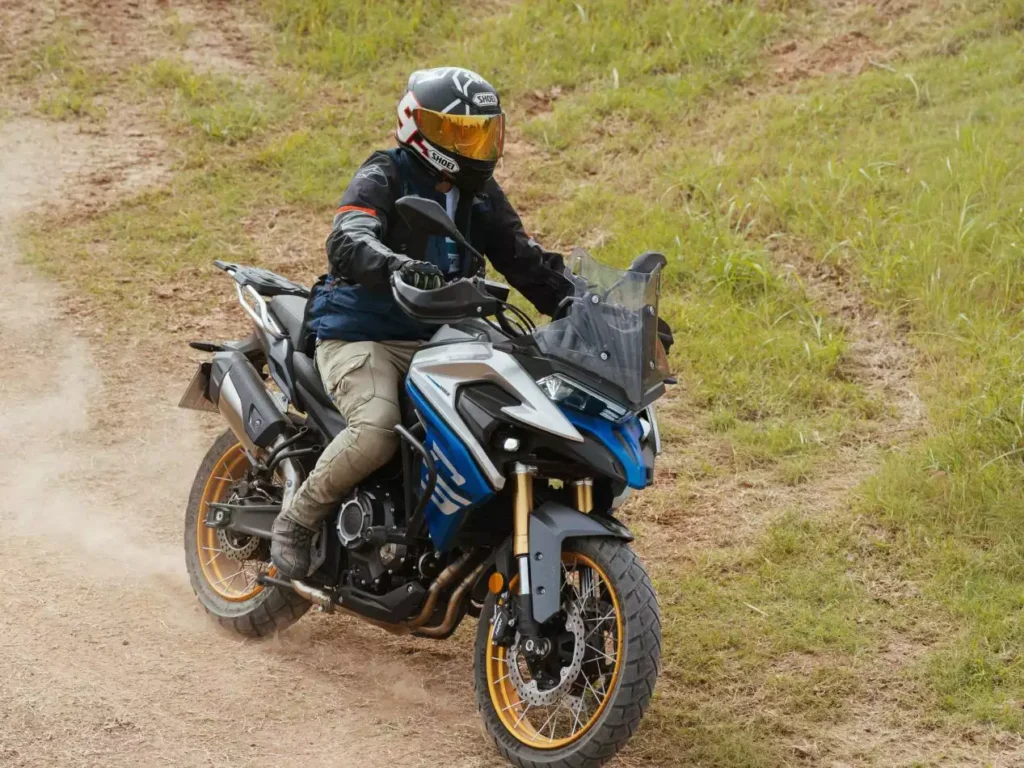
For an adventure motorcycle, seat height is not designed independently—it is a natural outcome of the bike’s overall engineering. From the suspension system and ground clearance to rider ergonomics, every design decision contributes to the final seat height. Among these, three factors play the biggest role.
Longer Suspension Travel Creates a Taller Motorcycle
Long-travel suspension is one of the defining characteristics of every adventure motorcycle.
Unlike motorcycles designed primarily for paved roads, ADV bikes are expected to tackle gravel roads, forest trails, rocky terrain, and uneven surfaces. To maintain traction and absorb repeated impacts, they require suspension with a greater range of compression and rebound.
Accommodating this additional suspension movement requires more vertical space within the chassis, resulting in a taller overall motorcycle. As a result, the seat height naturally increases along with the suspension travel.
Rather than being a design goal itself, a taller seat is often a byproduct of a suspension system built for demanding terrain.
Greater Ground Clearance Improves Off-Road Capability
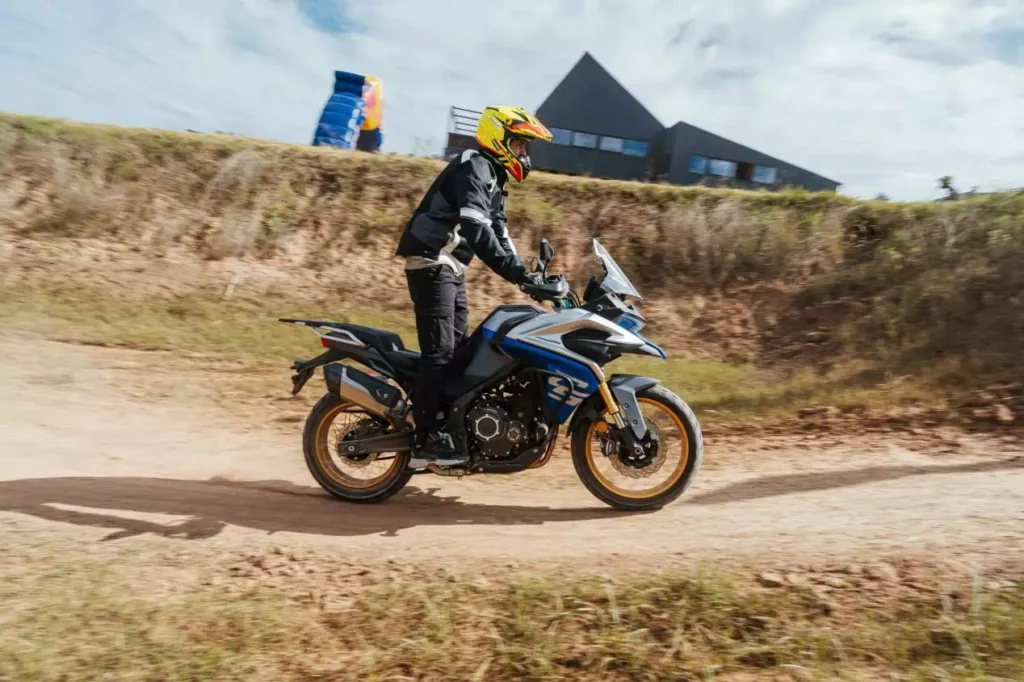
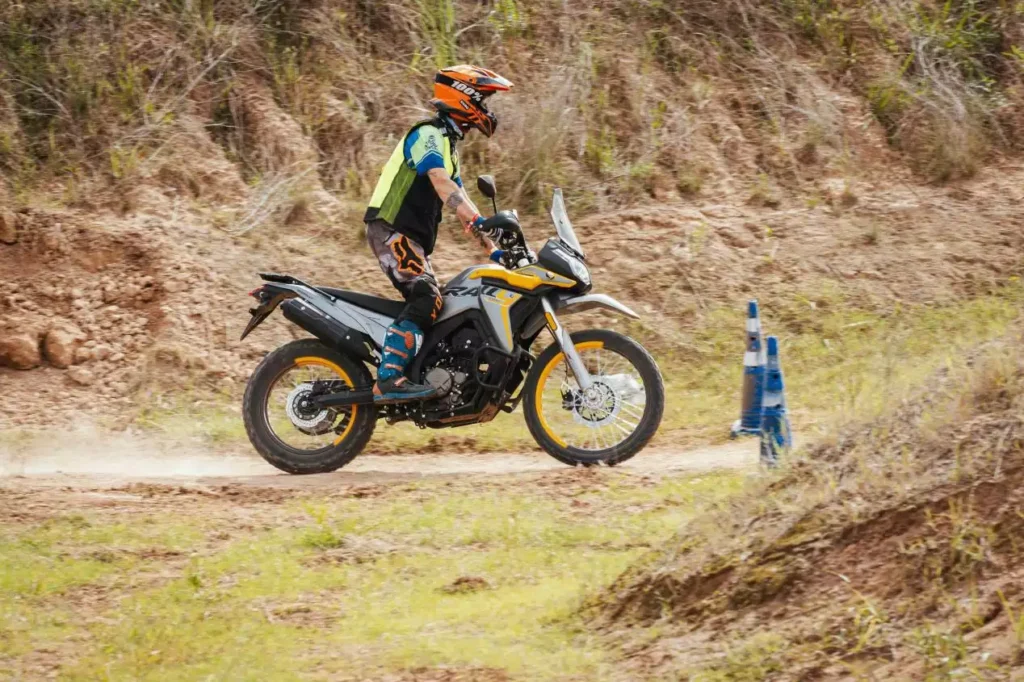
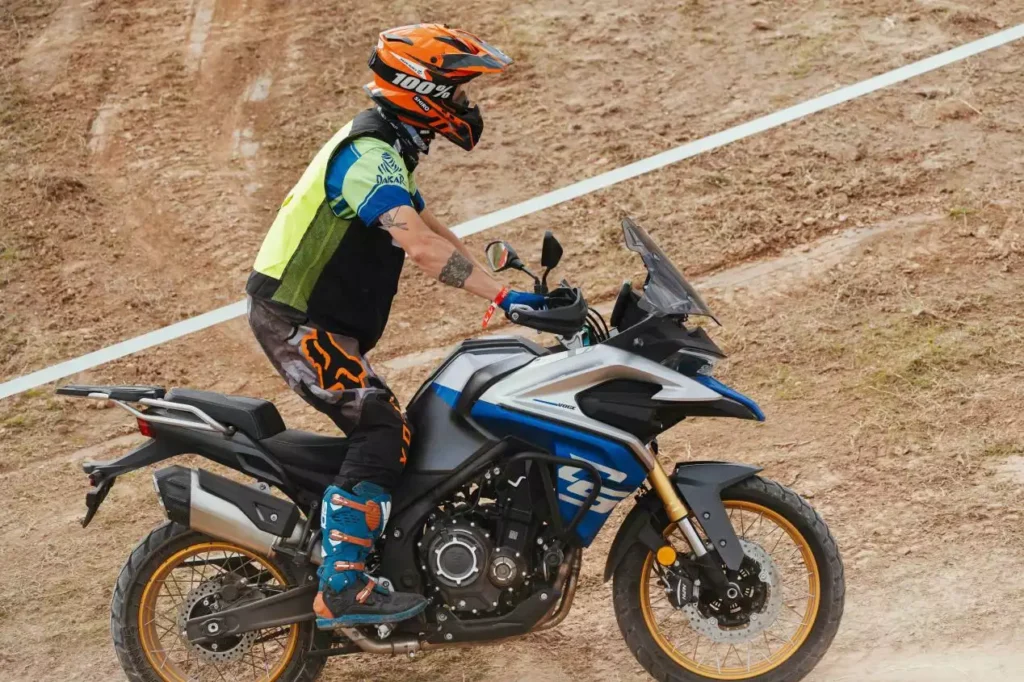
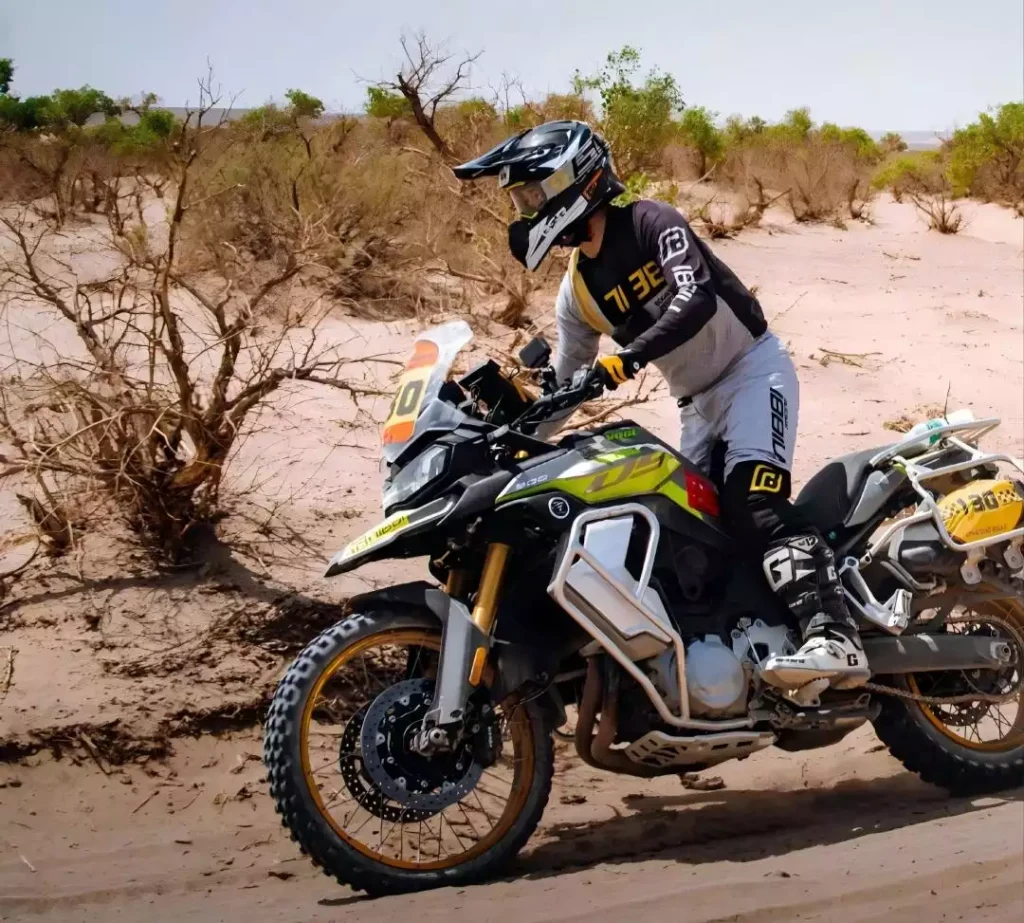
Ground clearance is another key factor that directly influences seat height.
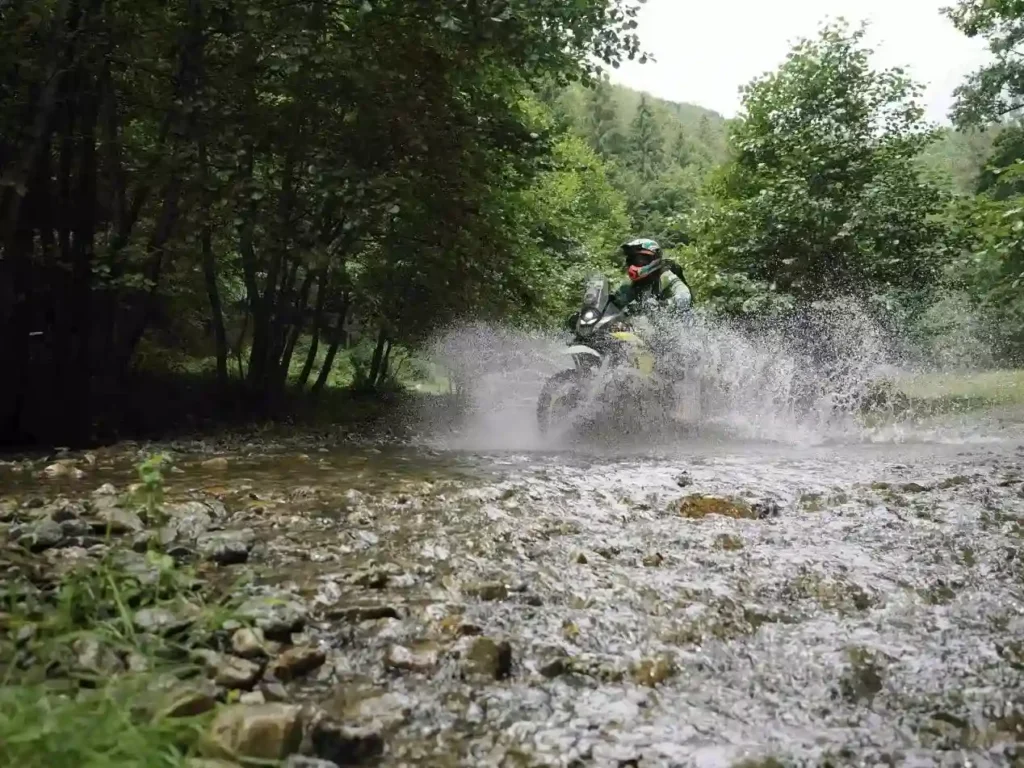
Adventure riding goes far beyond highway cruising. Riders may encounter rocks, tree roots, deep ruts, shallow streams, and other challenging obstacles along the way.
If the motorcycle sits too low, the engine or frame can easily strike the ground, limiting both protection and off-road performance. That’s why most adventure motorcycles feature higher ground clearance, providing more space beneath the motorcycle for obstacles while allowing the suspension to work effectively.
Greater ground clearance not only improves obstacle clearance but also contributes to the taller riding stance that has become a signature characteristic of ADV motorcycles.
Rider Ergonomics Are Designed for Standing as Well as Sitting
Another important consideration is rider ergonomics.
Many riders initially approach an adventure motorcycle as if it were simply a touring bike. However, when riding on gravel, sand, or rough trails, standing on the footpegs becomes an essential riding technique. It allows riders to absorb impacts with their legs, shift body weight more effectively, and maintain better control over the motorcycle.
For this reason, ADV motorcycles are designed not only for seated comfort but also to make transitions between sitting and standing feel natural.
This explains why adventure motorcycles often feature taller handlebars, wider footpegs, and relatively higher seats, creating a riding position that supports both long-distance touring and technical off-road riding.
Is a Taller Seat Height Always Better?
Not necessarily.
Many riders associate a taller seat with better off-road performance, but there is no single seat height that suits everyone.
For riders who mainly commute or enjoy weekend road trips, a motorcycle that allows easier footing at traffic lights and low-speed maneuvers often inspires greater confidence.
For long-distance touring, a moderate seat height usually provides a well-balanced combination of comfort, stability, and light off-road capability.
On the other hand, riders who frequently tackle gravel roads, forest trails, or more demanding off-road routes may benefit more from longer suspension travel, increased ground clearance, and ergonomics optimized for standing riding than from having the lowest possible seat.
Ultimately, the question isn’t how tall the motorcycle is—it’s whether the motorcycle matches the way you ride.
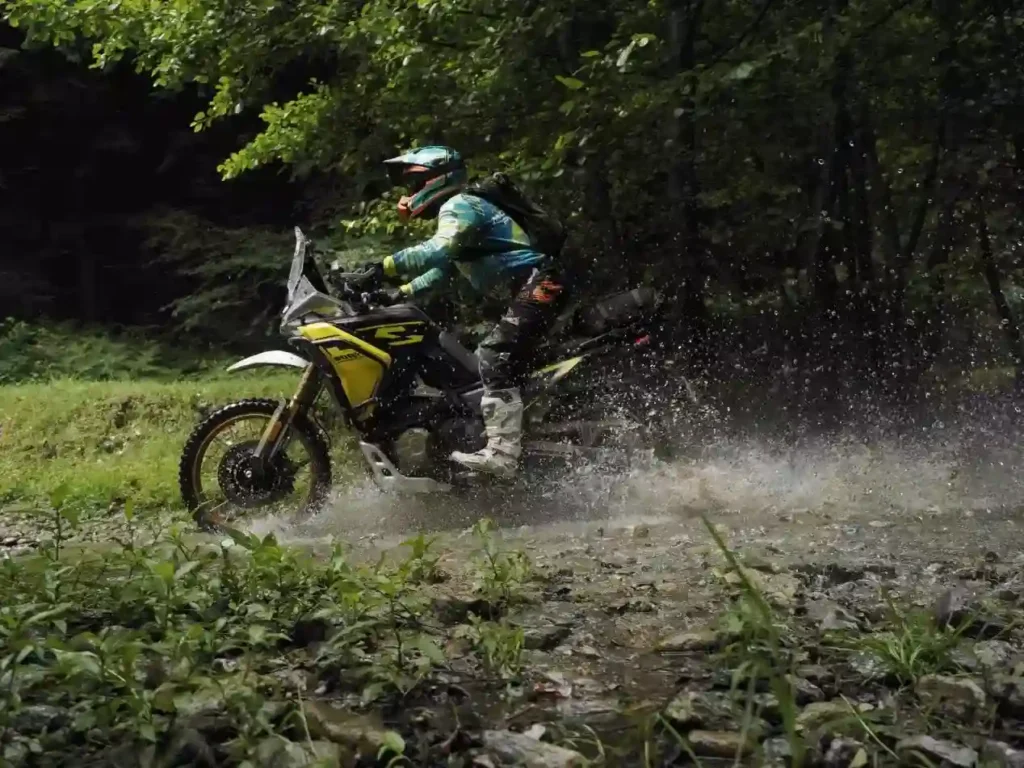
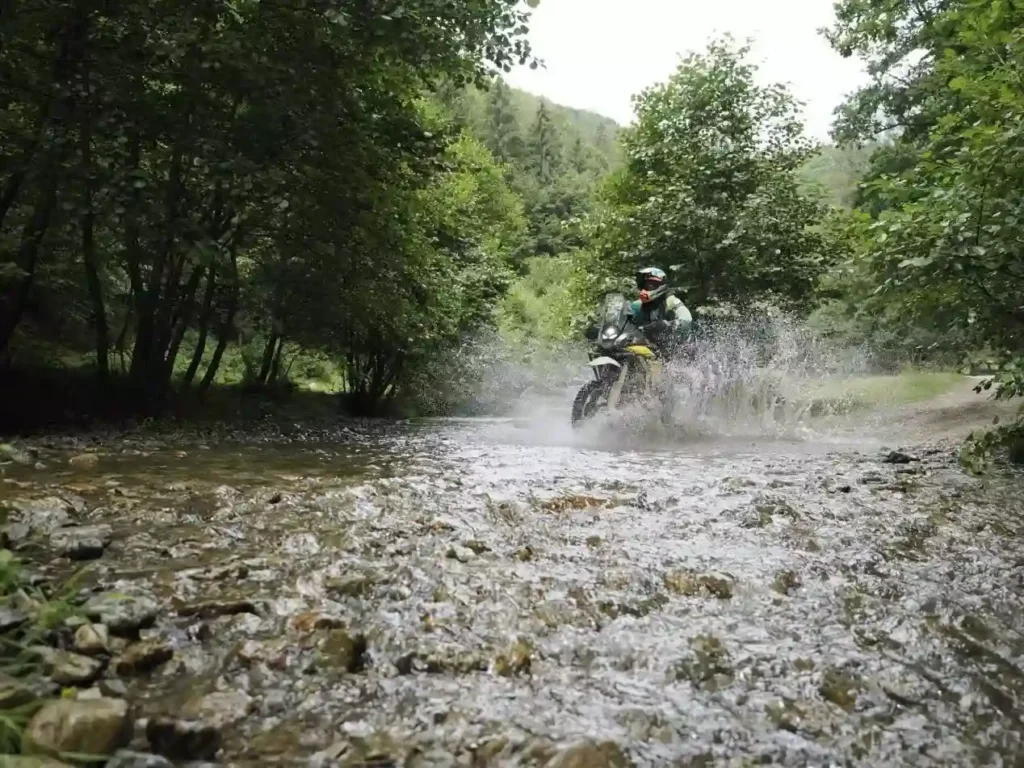
Seat Height Isn’t the Only Number That Matters
Many riders judge whether a motorcycle will fit them based solely on their overall height. In reality, inseam length and seat width often have a much greater influence on how comfortable and confident a rider feels.
For example, two motorcycles may both have an official seat height of 850 mm, yet one can feel significantly easier to reach the ground on because of a narrower seat or slimmer fuel tank design.
When comparing adventure motorcycles, seat height should be viewed as one reference point rather than the only specification that matters. Your inseam, riding experience, and a real test ride will always provide a more accurate picture. In addition, suspension sag—the amount the suspension compresses under the rider’s weight—also affects how tall a motorcycle feels when stopped. As a result, the published seat height is only a reference and may not reflect every rider’s real-world experience.
VOGE Dual Sport Lineup: Different Seat Heights for Different Adventures
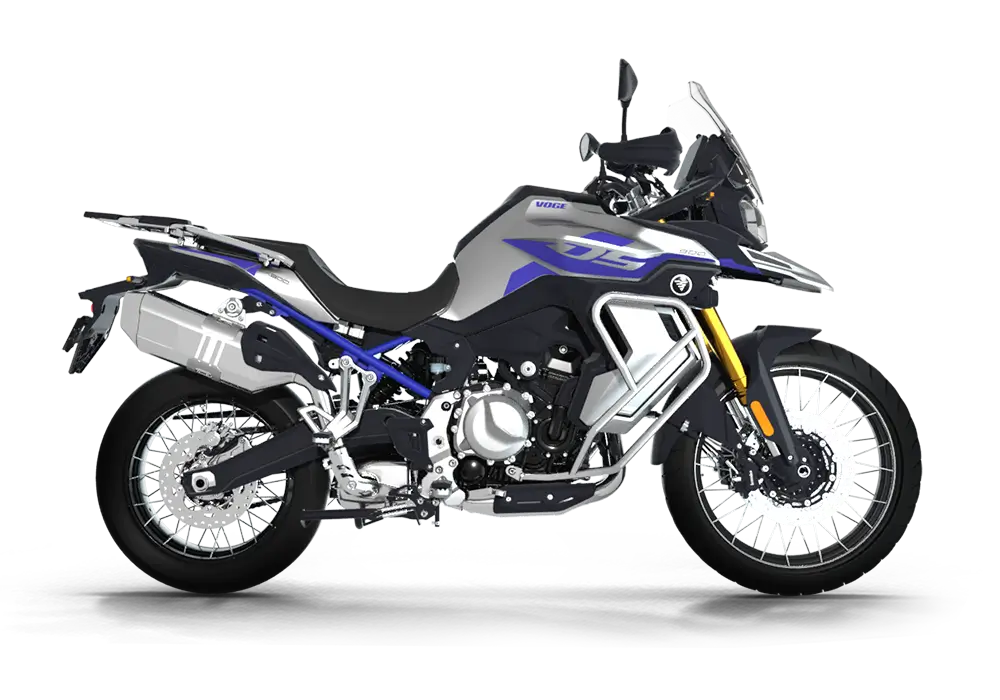
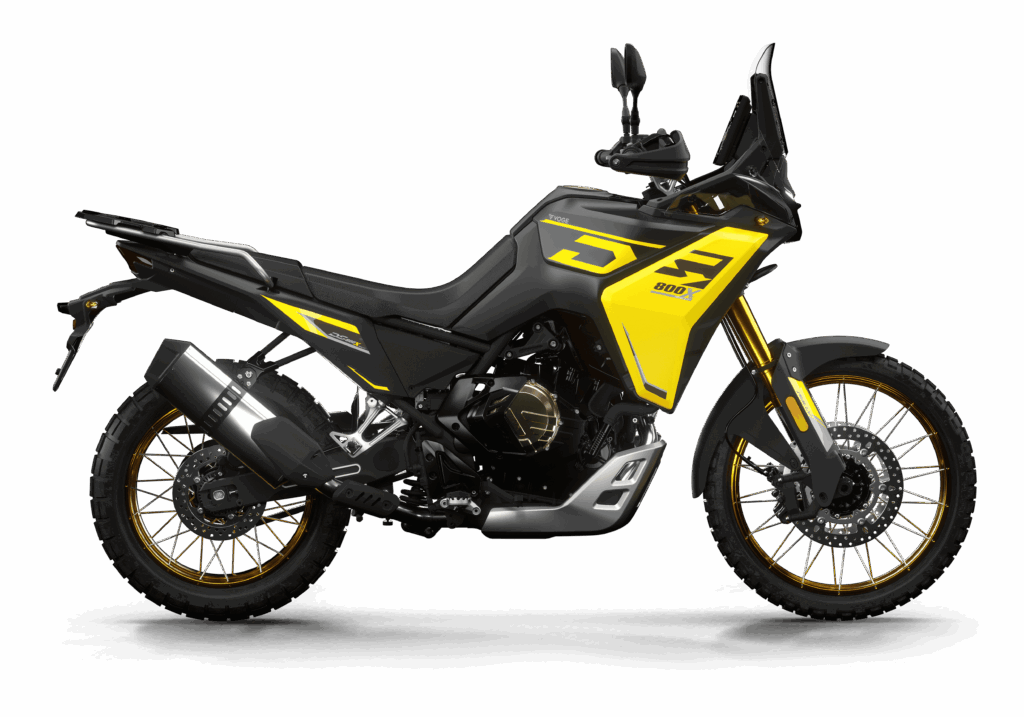
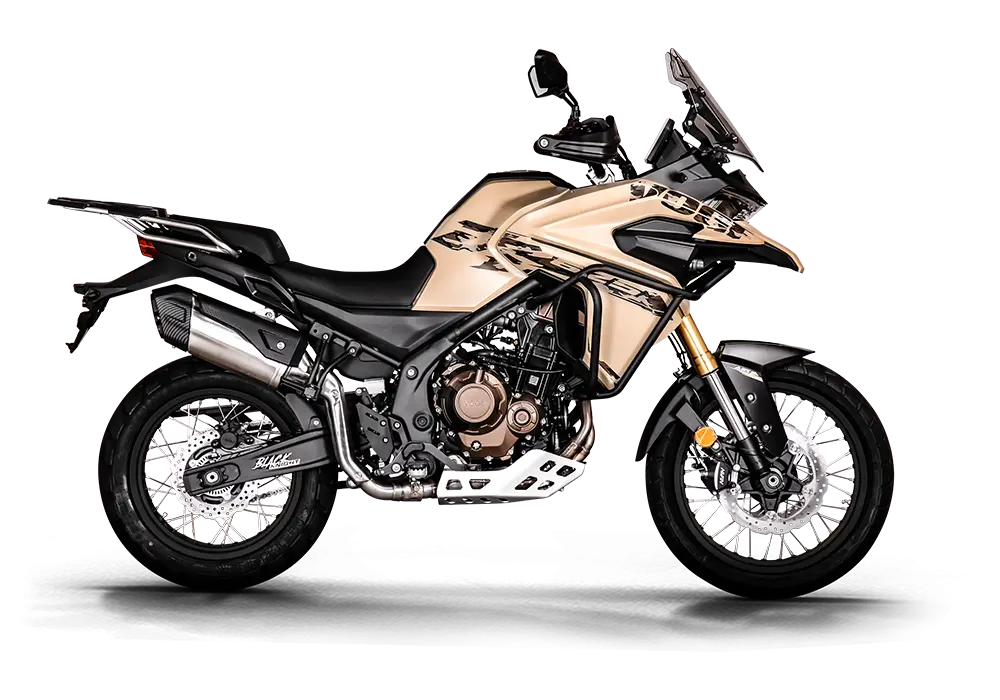
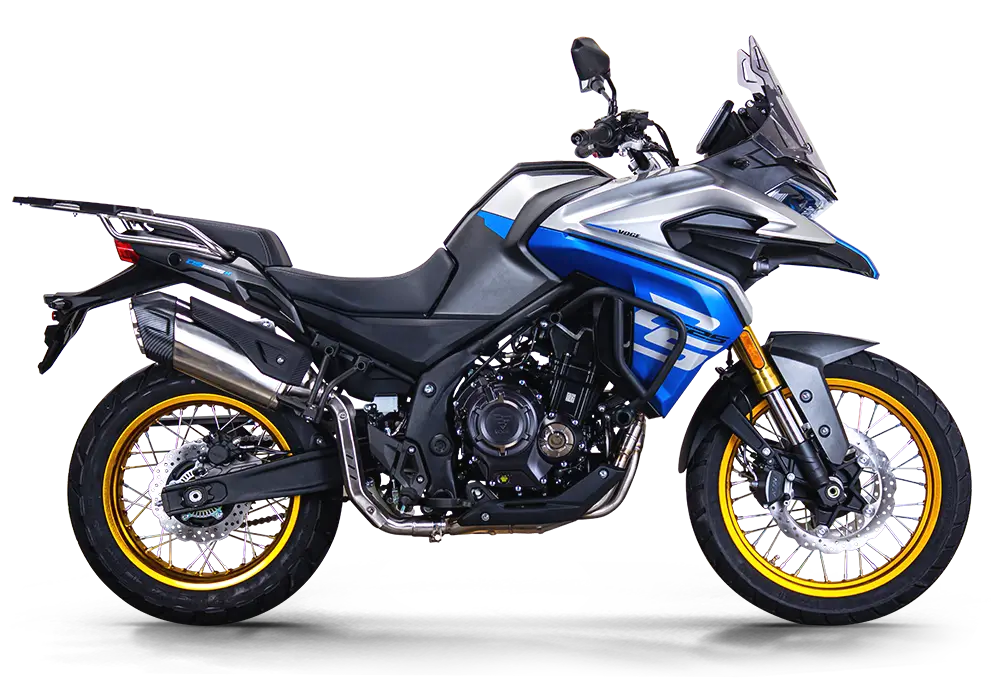
VOGE’s Dual Sport lineup covers a wide range of adventure riding styles—from lightweight rally-focused machines to mid-size adventure bikes and long-distance touring models. Different seat heights are not simply a matter of making a motorcycle taller or shorter; they are the result of different engineering priorities for different riding environments.
| VOGE Dual Sport Model | Seat Height | Ground Clearance | Recommended Riding Scenarios |
| DS525X | 810 / 830 mm | 200 mm | Daily commuting, weekend exploration, and light off-road riding |
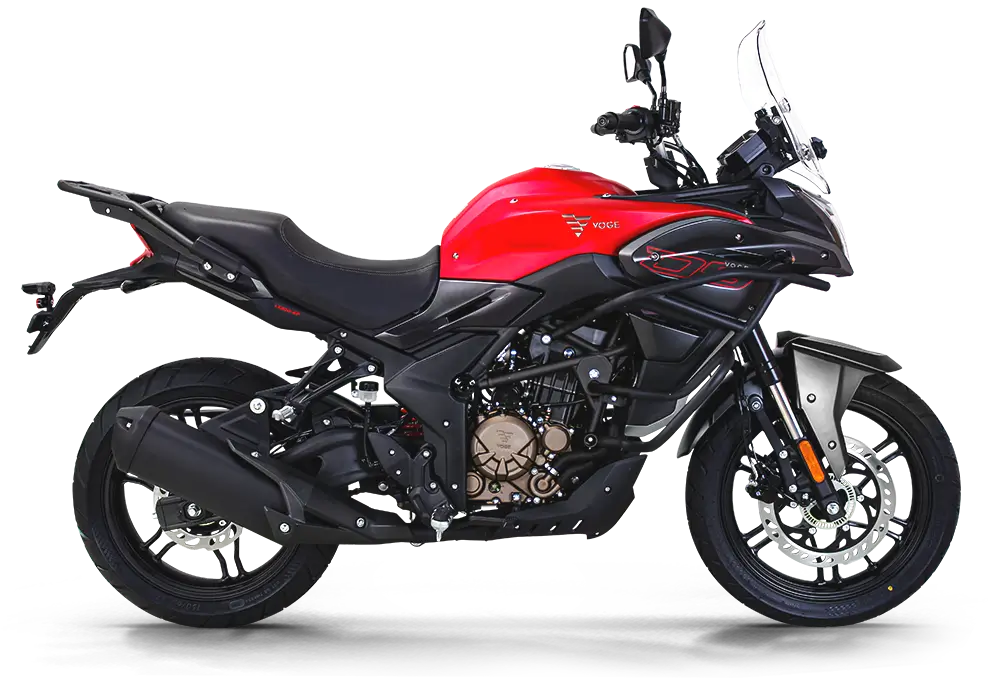
| DS900X | 825 mm | 190 mm | Long-distance touring, multi-surface travel, and highway cruising |
| DS625X | 835 mm | 220 mm | Adventure touring, gravel roads, and mixed-terrain riding |
| DS800X Rally | 850 mm | 220 mm | Rally-style adventures, forest trails, and demanding off-road terrain |
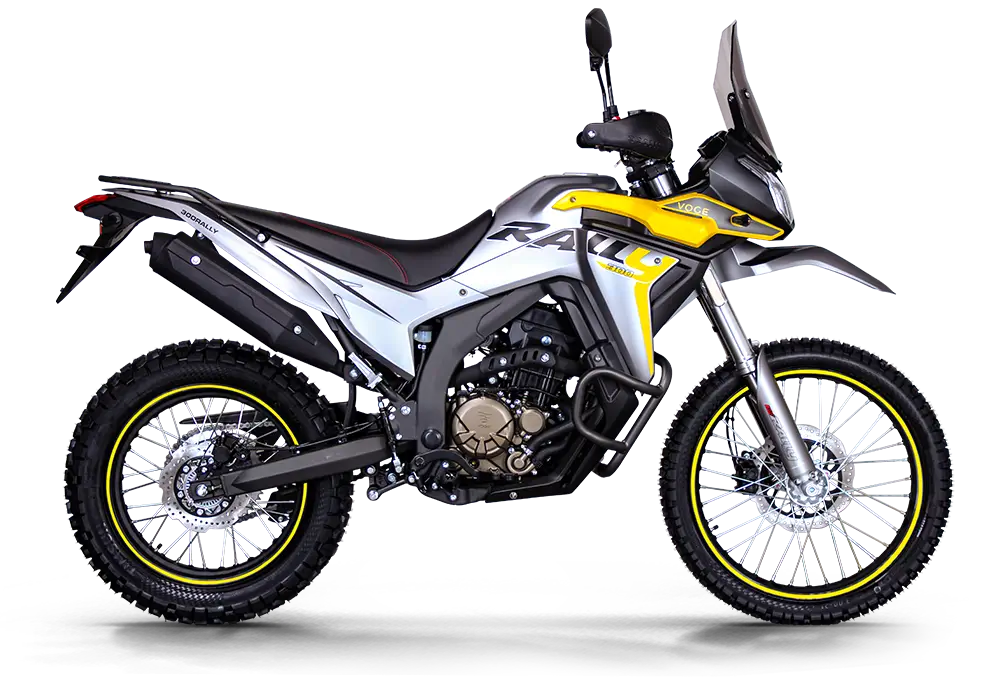
| 300GY Rally | 905 mm | 280 mm | Dedicated rally riding, technical trails, and serious off-road adventures |
For VOGE, seat height is never treated as a standalone specification. It is an integral part of the motorcycle’s overall engineering philosophy. Every model in the DS series is developed around a specific riding scenario, helping riders choose the motorcycle that best matches their riding style—not simply the one with the highest or lowest seat.
Choose the Ride, Not the Number
For an adventure motorcycle, seat height is far more than a number on a specification sheet.
It reflects the balance between suspension performance, ground clearance, rider ergonomics, and chassis design, while also revealing the type of terrain the motorcycle is intended to conquer.
When choosing your next ADV motorcycle, it’s worth asking yourself a more important question than simply comparing seat heights: Where do you want your motorcycle to take you?
At VOGE, we believe the best motorcycle isn’t defined by a single specification. From the rally-focused 300GY Rally with its 905 mm seat height to the touring-oriented DS900X, every model in the VOGE Dual Sport lineup reflects a different engineering approach to adventure riding. Instead of choosing a motorcycle based solely on seat height, riders can select the model that best fits their riding style, experience, and the terrain they want to explore.